Fees
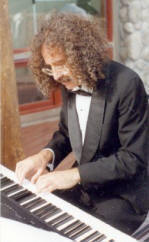
Don teaches individuals and classes through Nexus Information Consulting Co., Ltd. Private lessons take place in various schools in the Shenzhen districts of Bao'an, Futian, and Nanshan.
For additional information and pricing and to schedule appointments, please call Rita or Janet at the Shenzhen office at 0755-2794-5552
Lessons:
Piano, beginning and advanced
Music Theory and Composition
Music Interpretation
Don tailors theory lessons to be applicable to the student's instruments. Teachers of piano and other instruments are encouraged to explore having Don provide supplemental training for their students.
Teaching Philosophy
- First things first...
- The first meeting may be at the student's home. Don likes to get an idea of the student's practice environment. It is an opportunity for Don to interview the student, and if one or more parents are involved, to interview them with and without the student. It is also a good time for the student to interview Don!
Don can travel to teach at the student's home; however, there are travel time charges. An option available to parents is that if two or more students can be taught at the same location, the additional charge can be reduced per student.
- Innovation
- Lesson One: Whether you're in kindergarten or are a professional musician, the first thing we'll do is spin a jump rope. This allows us to see in slow motion how sound is created at the source, in this instance, a vibrating string.
For the youngster, it is purely experiential; for the professional, we may even go so far as to look at the math formulae in back of the motion. For everyone, it provides the ultimate solid foundation for appreciating the way music is put together. And for everyone, it is fun and exciting.
- Music as Language
- In the past 28 years, science has proven what most suspected all along, that music is essentially processed in the speech centers of the brain, right along with English, French, and other languages, spoken and unspoken. Teaching music only to students who are expected to excel professionally would be like teaching English in the schools only to those expecting to become professional writers, actors and storytellers. Music, like English and any other language, must be taught first and foremost for the appreciation of the language; in any language, those who choose to excel will naturally emerge provided they are taught in a supportive environment.
- Adapting to the Student
- Some music students learn best by listening, others by seeing, others by touch. Some wish to learn classical; some only gospel. A good teacher trims around the edges instead of trying to reshape the round peg to fit the square hole. At the same time, a good teacher also inspires, and may introduce the student to regions previously unexplored. Thus one interested in Eminem may discover enjoyment in the ancient Gregorian Chant that is embedded in his music.
Students currently studying with other teachers
- Supplementary Theory and Composition
- Students currently studying piano, voice, and other instruments may have a need for and an interest in advanced theory and composition instruction. Teachers are encouraged to explore utilizing Don's talents and experience to provide their students with the additional training. He tailors the instruction to the student's instrument and style interests, and consults with the teacher as needed.